
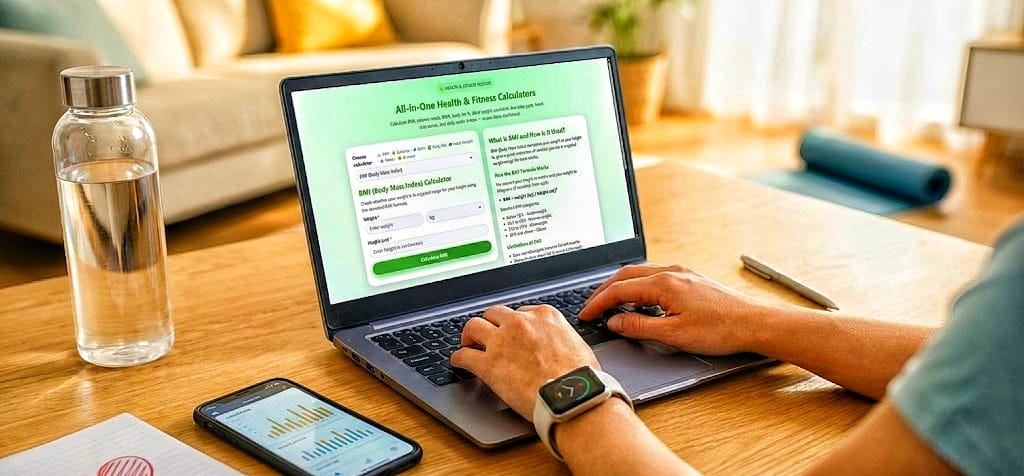
Online fitness calculators have become one of the most convenient tools for people starting their health or weight-management journey. From BMI and BMR to calorie calculators, macro split tools, heart-rate estimators, and body-fat percentage guessers—these quick digital tools promise instant insights with just a few taps. But how accurate and safe are they really? And what should users know before trusting the numbers these websites generate?
This in-depth tech analysis breaks down how these calculators work, their limitations, privacy concerns, and best practices for safe usage. If you’re searching for reliable calculations without unnecessary ads or confusing dashboards, platforms like Fitness TechHubb Calculators offer clean, transparent, and secure tools designed for everyday users.
🚀 Get accurate fitness calculations in seconds!
🔗 Visit us: https://fitness.techhubb.blog/

What Online Fitness Calculators Actually Do
Most fitness calculators estimate health and performance metrics using standardized formulas drawn from public health research, sports science, and nutrition studies. The numbers are generated from simple inputs such as:
- Age
- Height
- Weight
- Sex
- Activity level
- Fitness goal (maintenance, weight loss, or muscle gain)
Common tools include:
- BMI Calculators
- BMR & Calorie Calculators
- Macro Split Calculators
- Body-Fat Estimators
- Heart-Rate & Training Zone Tools
Because the formulas are mathematical, calculators can deliver instant results that appear very precise. However, the biological reality behind these metrics is more complex than a single equation can capture.
Websites like Fitness TechHubb simplify this process by offering multiple calculators in one place, helping users explore weight, calorie intake, workouts, and health trends with clean UI and no clutter.
Accuracy Limits: Why Calculators Give Estimates, Not Diagnoses
From a technology standpoint, online calculators are excellent at running equations—but equations alone can’t capture the full biological picture.
1. BMI Has Structural Blind Spots
BMI correctly calculates the ratio of weight to height, but it doesn’t distinguish:
- Fat vs. muscle
- Bone density
- Body-fat distribution
- Differences across age and ethnic groups
That’s why athletes or muscular people may appear “overweight,” while someone with normal BMI may still have high visceral fat.
2. BMR & Calorie Calculators Are More Accurate—but Still Limited
Tools using formulas like Mifflin-St Jeor or Harris-Benedict are reliable for estimating resting energy expenditure, but they cannot see:
- Your real metabolic rate
- Hormonal changes
- Muscle mass
- Stress levels or sleep quality
This means the values should be viewed as a starting range, not a strict diet rule.
3. Body-Fat Calculators Have Higher Variability
Online body-fat tools based on measurements or visual comparison are more approximate than clinical scans (DEXA, MRI, hydrostatic weighing). They can help track trends but cannot guarantee medical-grade accuracy.
Platforms like fitness.techhubb.blog clearly mention formula sources and give transparent calculations, helping users understand what the numbers mean instead of blindly relying on them.
Technology Behind the Calculators: Why Algorithms Matter
Every online fitness calculator embeds a specific formula or algorithm. This tech decision directly affects the reliability of the output.
Transparency vs. “Black-Box” Tools
Good calculators reveal:
- Which formula is used
- Why that formula was chosen
- How the result should be interpreted
Poor-quality sites simply show a number without explaining anything—making it hard for users to judge accuracy.
Impact of Devices and Sensors
Connected devices like smart scales or fitness trackers use bioelectrical impedance analysis (BIA) and proprietary algorithms. Factors like hydration, skin temperature, or slight movements can create huge measurement variations. The algorithm then amplifies or corrects these signals, but not always accurately.
Data Privacy & Cybersecurity: A Hidden Safety Concern
Many people don’t realize that fitness calculator websites often collect sensitive personal information:
- Age
- Weight
- Body measurements
- IP address
- Email (if required)
- Cookies for tracking
Some platforms use this data for:
- Advertising
- Profiling
- Selling insights to third parties
Free tools vary widely in transparency. The safest choice is to use calculators that:
- Do not force account creation
- Do not store your inputs
- Provide a clear privacy policy
- Avoid aggressive data tracking
This is one reason users prefer privacy-safe tools like Fitness TechHubb, which work instantly without collecting unnecessary details or storing your personal data.
When Online Fitness Calculators Are Useful
Used responsibly, these tools can help users make smarter decisions and understand their bodies better.
They are especially helpful for:
✔ Understanding Your Weight Category
BMI and body-fat tools offer a rough health snapshot.
✔ Estimating Daily Calories
Helps you build meal plans and track progress.
✔ Setting Exercise Targets
Heart-rate zone calculators help beginners structure workouts safely.
✔ Tracking Trends
Using the same tool regularly helps reveal progress, even if individual results aren’t perfect.
✔ Learning the Basics
Beginners find it easier to understand concepts like metabolism, macros, and caloric balance.
On fitness.techhubb.blog, users can combine multiple calculators to build a complete health overview.
When Fitness Calculators Can Be Misleading or Unsafe
Despite their usefulness, there are situations where relying too heavily on calculators may be harmful.
❌ Treating Estimates as Medical Diagnoses
BMI cannot replace blood tests, physical exams, or medical screening.
❌ Strict Dieting Based on Calculator Outputs
Calorie deficits predicted by generic formulas may be unsafe for:
- People with medical conditions
- Women who are pregnant or breastfeeding
- Individuals with a history of eating disorders
- Athletes with high energy demands
❌ Switching Tools Too Often
Different calculators produce different outputs. Constantly adjusting your diet based on new numbers creates:
- Confusion
- Stress
- Inconsistent habits
❌ Using Tools Without Understanding the Formula
Not all calculators are built equally—some use outdated or simplified equations.
How to Use Online Fitness Calculators Safely
Follow these guidelines to maximize accuracy and minimize risks:
1. Treat Results as Estimates
Use them to guide decisions, not control them.
2. Stick to Reputable Sources
Choose calculators that clearly explain formulas—like those on fitness.techhubb.blog, which prioritize transparency.
3. Enter Accurate and Consistent Data
Small mistakes in input cause large variations in output.
4. Protect Your Privacy
Avoid platforms asking for unnecessary personal info just to run a calculation.
5. Seek Expert Help for Special Cases
Consult professionals if you are:
- Pregnant
- Managing chronic illness
- Training at an advanced level
- Recovering from injury
Fitness calculators complement professional advice; they do not replace it.
Conclusion: Are Online Fitness Calculators Safe?
Yes—online fitness calculators are generally safe when used responsibly.
They offer helpful guidance, simplify complex health metrics, and motivate users to take control of their fitness journey. However, their safety depends on:
- Understanding their limitations
- Choosing transparent calculators
- Protecting your data
- Using the numbers as starting points, not strict rules
For the best balance of accuracy, transparency, and privacy, reliable platforms like Fitness TechHubb provide a clean and safe environment where users can calculate BMI, BMR, calories, macros, and more without worrying about data misuse or hidden algorithms.
Used wisely, these tools can empower you to take meaningful, informed steps toward better health—while respecting both your privacy and your body’s individuality.
Do Visit : 🔗 https://fitness.techhubb.blog/
Leave a Reply