

Spatial computing, along with AR, VR, and mixed reality, fuses digital overlays with the physical world to redefine human interaction. This technology promises to transform industries from education to healthcare by creating immersive environments that feel astonishingly real. As devices evolve, spatial computing emerges as the backbone of a new digital era, blending realities seamlessly.
Core Concepts Explained
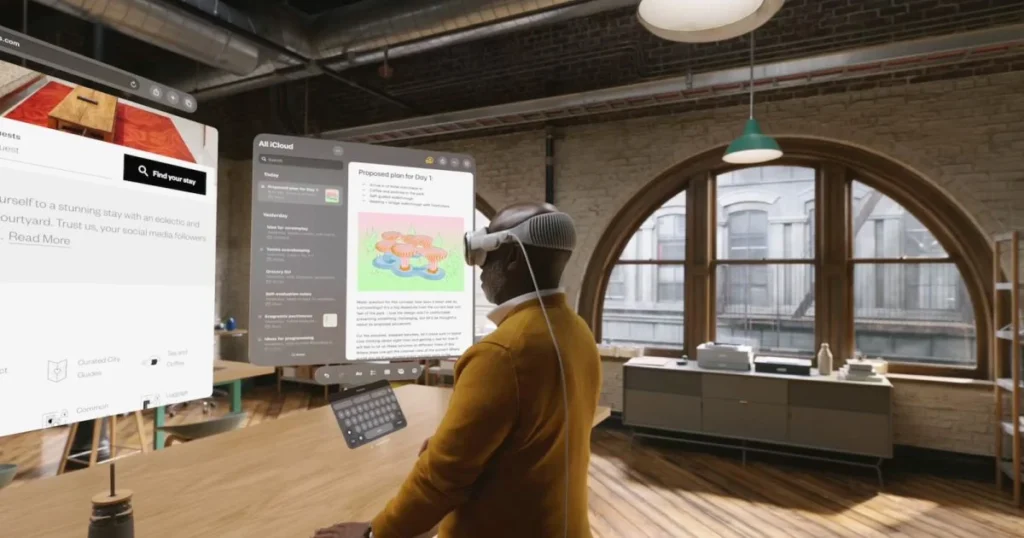
Spatial computing refers to systems that understand and manipulate 3D space, enabling computers to interact with the real world intuitively. Augmented Reality (AR) adds digital elements like holograms onto live views from cameras, while Virtual Reality (VR) immerses users in fully simulated worlds through headsets. Mixed Reality (MR) bridges these by letting virtual objects interact physically with real surroundings, such as resizing a digital chair to fit an actual room.
These technologies rely on advanced sensors, AI-driven tracking, and high-resolution displays. For instance, hand-tracking in MR devices allows gesture-based controls without controllers, making interactions natural. Spatial computing powers this ecosystem by mapping environments in real-time, creating persistent digital anchors that stay fixed even as users move.
Key distinctions include AR’s lightweight glasses for everyday use versus VR’s enclosed headsets for deep immersion. MR devices like advanced headsets combine both, offering passthrough cameras for blended views. This convergence drives spatial computing’s rise as the umbrella term for intuitive, context-aware computing.
👉Learn what Spatial Computing really means
2026 Technology Breakthroughs
By 2026, spatial computing accelerates with hardware like next-gen Apple Vision Pro successors and competitors pushing XR shipments beyond 40 million units annually. Integration of Physical AI allows robots and avatars to navigate shared spaces intelligently, reviving VR as “VR+” with generative world models.
Emerging trends feature multimodal AI processing light, infrared, and ultrasound for editable 3D environments. Brain-Computer Interfaces (BCIs) promise thought-controlled interactions, minimizing physical inputs. Lightweight spatial AR glasses replace bulky headsets, enabling all-day enterprise use for remote collaboration.
CES 2026 highlights showcase smart glasses and spatial platforms for industrial workflows. Conferences emphasize enterprise XR deployments, digital twins, and spatial AI for training simulations. These advancements make spatial computing accessible, with persistent context across devices.
The increasing role of artificial intelligence in sustainability mirrors a larger trend across industries, where AI itself is becoming a dominant force shaping creativity, productivity, and innovation.
Real-World Applications
In education, MR simulations let students dissect virtual frogs or explore ancient ruins overlaid on classrooms, boosting retention by 75% per studies. Healthcare employs AR for precise surgeries, projecting patient scans onto real bodies, reducing errors significantly.
Business leverages spatial AR for remote teams, creating shared 3D models where global engineers tweak designs collaboratively. Manufacturing uses digital twins—virtual replicas of factories—for predictive maintenance, cutting downtime by up to 30%. Retailers deploy AR try-ons, lifting conversion rates through immersive shopping.
Gaming evolves with mixed reality worlds blending home environments into adventures, while entertainment streams spatial concerts viewable from any angle. Military training immerses soldiers in realistic battlefields, enhancing preparedness without risks.
Business and Monetization Opportunities
Enterprises adopt spatial platforms for operational visibility, replacing siloed VR pilots with integrated systems. Freelance creators build custom AR apps via no-code tools, monetizing through marketplaces. Bloggers like those on TechHub can offer sponsored reviews of spatial devices, tapping affiliate programs.
Startups develop spatial AI for e-commerce, charging subscription fees. Educational platforms license MR courses, scaling globally. Hardware firms partner for B2B spatial computing kits, projecting $50B market by 2028.
Investment surges in BCIs and generative models, with VCs eyeing VR+ startups. Content creators profit by producing tutorials on “spatial computing for beginners,” using YouTube and Udemy.
- Develop AR filters for brands
- Create enterprise training modules
- Launch spatial metaverse events
- Affiliate spatial headset sales
- Consult on XR implementations
Challenges and Solutions
High costs limit adoption, but 2026 sees sub-$500 devices democratizing access. Motion sickness affects 20% of VR users; AI adaptive rendering reduces it via personalized frame rates. Privacy concerns arise from constant spatial mapping—solutions include edge computing for on-device processing.
Battery life and field-of-view lag persist; micro-OLED displays and efficient chips address them. Standardization efforts unify AR/VR protocols, easing developer workflows. Ethical AI guidelines prevent biased spatial models.
Regulatory hurdles in data protection spur GDPR-compliant platforms. User training programs bridge skill gaps, with free NPTEL courses on XR basics.
Future Predictions to 2030
Spatial computing integrates with everyday wearables, making AR ubiquitous like smartphones. By 2030, 1B users engage daily, powering holographic calls and AI companions in MR. Quantum sensors enable centimeter-accurate mapping, birthing “spatial web” for shared realities.
Work transforms: hybrid offices blend physical desks with virtual teams. Cities deploy AR navigation overlays, slashing commute stress. Personalized medicine uses MR for home therapy sessions.
Generative AI crafts infinite worlds on-demand, from custom vacations to simulated histories. Sustainability benefits via virtual prototyping, minimizing material waste. The result: a reality augmented at will, where digital enhances physical without replacement.
Leave a Reply