
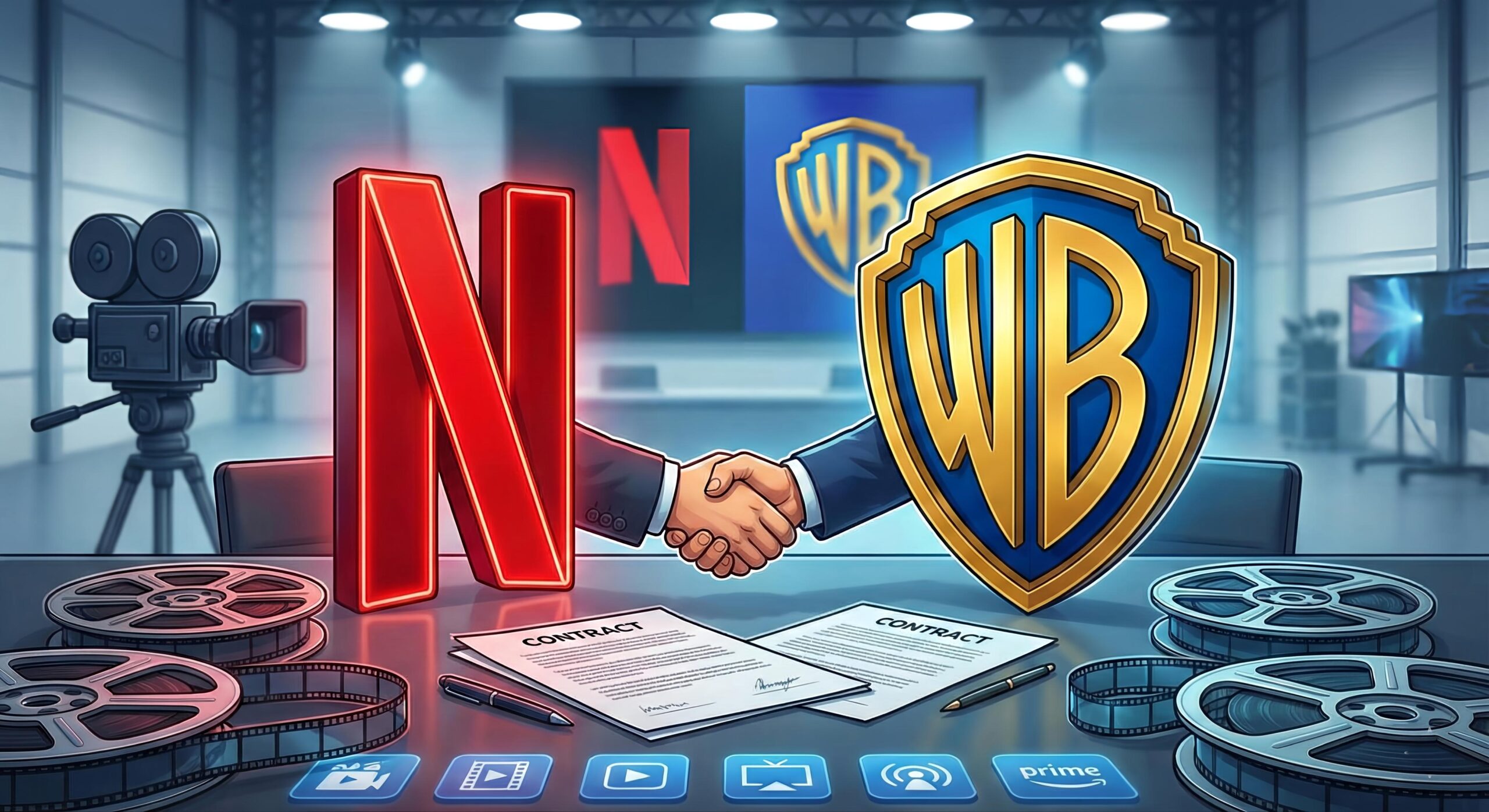
Netflix has struck a historic, multi‑billion‑dollar deal to buy Warner Bros.’ studio and streaming assets, including HBO, HBO Max and major franchises like Harry Potter, DC and Game of Thrones, in a transaction valued at about 82–83 billion dollars that is expected to reshape the global streaming market if regulators approve it. For viewers, this means many of Warner Bros.’ biggest movies and shows are likely to live under Netflix’s roof in the coming years, while for Hollywood it raises big questions about competition, cinemas, and the future of other streaming platforms.
What exactly is the Netflix–Warner Bros. deal?
The current deal is an acquisition: Netflix plans to buy Warner Bros. Discovery’s film and TV studios, HBO/HBO Max, DC Entertainment and their vast content libraries in a cash‑and‑stock transaction valued at around 82.7–83 billion dollars, including debt. The equity value alone is roughly 72 billion dollars, making it one of the largest media and entertainment deals of the last decade.
Importantly, Netflix is not buying everything inside Warner Bros. Discovery. Instead, Warner Bros. Discovery will first split into two separate companies: one holding the studios and streaming assets that Netflix will acquire, and another (often referred to as Discovery Global) that will keep CNN, TNT, TBS, HGTV and other traditional cable channels as a standalone public company. This “split, then sell” structure helps regulators and investors evaluate the entertainment assets separately from the linear TV business.
What’s included: shows, movies and franchises
The most eye‑catching part of the deal is content: Netflix gains control of some of the most valuable IP in entertainment history. These libraries can feed Netflix’s global subscription machine for years with both classic titles and new spin‑offs and reboots.
Key assets that would fall under Netflix if the deal closes include:
- Warner Bros. film and TV studios, with classics like Casablanca, The Maltese Falcon and Gone With the Wind, plus modern franchises such as The Lord of the Rings films and the MonsterVerse.
- The Harry Potter universe (films and the in‑development TV series), which has long been one of Warner’s most valuable brands for theatrical, streaming and consumer products.
- DC Entertainment, covering the DC Universe of Batman, Superman, Wonder Woman and related movies and series.
- HBO and HBO Max programming, including Game of Thrones, The Sopranos, The White Lotus, Succession and many more prestige series.
- Popular sitcoms and long‑running hits like Friends and The Big Bang Theory, which have been among the most‑watched licensed shows on streaming platforms worldwide.
This acquisition sits on top of an existing licensing relationship. Since 2023–24, Warner Bros. Discovery has already been licensing older HBO titles to Netflix, sending shows like Insecure, Band of Brothers, The Pacific, Six Feet Under and Ballers to the platform under non‑exclusive deals that kept them on Max as well. In 2024, all six seasons of Sex and the City also arrived on Netflix US as part of this co‑exclusive HBO Originals licensing strategy.
Why Netflix is making this move
From Netflix’s perspective, this is a bold play to lock in content dominance just as the streaming wars mature and growth slows in many markets. With more competition from Disney+, Amazon, and regional players, Netflix wants not only subscribers but also irreplaceable franchises that keep users hooked and reduce churn.
Several strategic motives stand out:
- Library power: By adding Warner Bros. films, HBO series and tentpole franchises, Netflix builds an ultra‑deep catalog that can serve every demographic and genre preference, from superhero fans to classic‑movie lovers.
- Production scale: Netflix says the acquisition will expand its U.S. production capacity and long‑term investment in original content, giving it more studios, talent relationships and physical infrastructure.
- Global leverage: With Warner’s IP, Netflix can create local spin‑offs, animated series, reality shows and games based on globally recognized brands, something that strengthens its position in markets such as India, Europe and Latin America.
- Competitive moat: Owning—not just licensing—franchises like Harry Potter, DC and Game of Thrones gives Netflix a content moat that rivals cannot easily replicate or rent for a few years.
Netflix’s co‑CEOs have framed the decision as the next step in “evolving” the service in a world of too many choices, arguing that integrating Warner Bros. will deepen the quality and variety of what subscribers see on the home screen. At the same time, they have told subscribers that “nothing is changing today,” stressing that in the short term their plans and pricing remain the same while the transaction works through approvals.
How this affects your streaming experience
For ordinary viewers, the headline impact is simple: more of the content you already recognize could end up inside one Netflix app—eventually. But the exact experience will change gradually and will depend on how fast regulators sign off, existing licensing contracts expire, and Netflix reorganizes the combined business.
Here are the main ways your streaming life could be affected:
- One‑stop library: Over time, Netflix subscribers could see a large wave of Warner Bros. movies and HBO series—such as Harry Potter, DC films, Game of Thrones, Friends and The Big Bang Theory—consolidated into Netflix’s catalog instead of being scattered across multiple apps.
- Fewer separate subscriptions: If HBO Max (or Max) disappears as a standalone consumer brand after integration, you may no longer need a separate subscription just to watch HBO originals, because they could be bundled into Netflix plans.
- Possible price changes: Analysts note that such a massive content and production boost might eventually justify higher subscription prices or new premium tiers, even though Netflix is signaling no immediate changes while the deal is pending.
- More spin‑offs and reboots: Fans could see more series set in the Harry Potter universe, further DC shows, or additional Game of Thrones‑style spin‑offs, with Netflix funding and distributing them globally as exclusives.
- Algorithm advantage: Netflix’s recommendation system will gain a much bigger pool of titles to personalize for each user, which can increase overall watch time and keep you locked into its ecosystem.
Until the acquisition closes, content will continue to move based on existing licensing contracts. That means some HBO and Warner Bros. titles will remain on Max or other services, while others show up on Netflix under earlier licensing agreements.
Impact on Hollywood, rivals and cinemas
This mega‑deal is not just about subscribers; it reshapes power structures across Hollywood. By combining the world’s biggest paid streaming service with one of its most storied studios, Netflix becomes a hybrid player that controls both the distribution pipe and a large part of the premium content flowing through it.
Key industry‑level effects include:
- Pressure on rivals: Competitors like Disney, Amazon and Paramount (which previously tried to buy all of Warner Bros. Discovery) now face a stronger rival that owns more A‑list IP and has deeper direct‑to‑consumer reach. Some analysts expect additional consolidation or partnerships as others try to bulk up their own libraries.
- Concerns from cinemas: Theater owners and trade groups have already warned that the deal is an “unprecedented threat” to the traditional exhibition business, fearing shorter theatrical windows, fewer studio buyers for films and more pressure to funnel content quickly to Netflix.
- Labor and unions: Bigger leverage for Netflix in negotiations with writers’, actors’ and directors’ unions could become a major bargaining point in future contract talks, because the combined entity would control an even larger slice of production and distribution.
- Regulatory scrutiny: Because of its size and influence, the acquisition will undergo close antitrust review in the United States and abroad to determine whether it harms competition, especially in streaming and theatrical distribution.
If regulators block the deal or require heavy concessions, Warner Bros. Discovery could, in theory, consider other bidders such as Comcast or Paramount—but the signed agreement includes a break‑up fee in the billions if Warner walks away for a higher unsolicited bid.
Timeline, status and what happens next
The deal is announced but not yet fully completed, which is why Netflix keeps emphasizing that “nothing is changing today” for subscribers. Warner Bros. Discovery still has to finalize its internal breakup into the studio/streaming company that Netflix will buy and the separate linear TV company that will remain publicly traded.
The expected timeline and key steps are:
- Corporate split: Warner Bros. Discovery executes the separation of its studios and streaming assets (to be sold) from its cable and linear networks (to be retained as Discovery Global).
- Regulatory review: U.S. and international regulators review the transaction, analyzing competitive impacts on streaming, pay‑TV, theatrical exhibition and labor markets.
- Closing window: Company executives and analysts suggest the deal could close in roughly 12–18 months, depending on how quickly the breakup and approvals move.
During this period, Netflix and Warner Bros. Discovery continue operating separately, even as they coordinate on transition plans and continue existing licensing deals like the non‑exclusive HBO titles on Netflix. If everything is approved, the combined entity will emerge as a new, more powerful version of Netflix that includes Warner Bros. studios, HBO/HBO Max and DC Entertainment under a single corporate umbrella.
Leave a Reply