
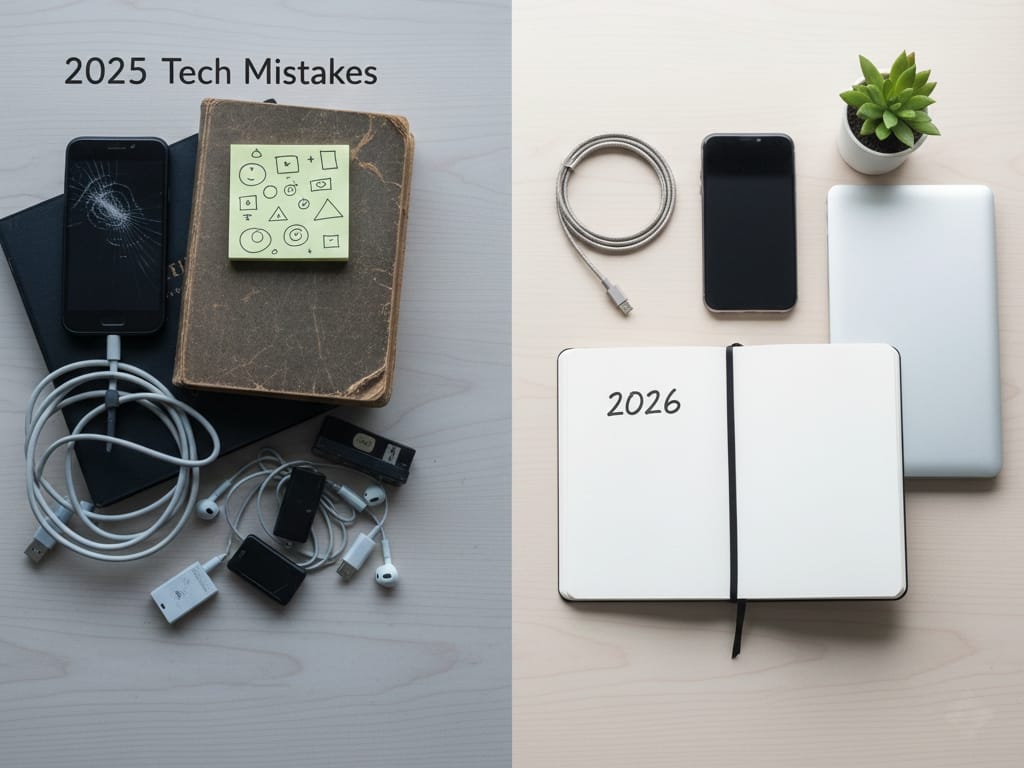
Introduction: A Year of Painful Tech Lessons
2025 was the year many everyday users learned hard lessons about technology the hard way: data was lost, accounts were hacked, AI tools backfired, and people locked themselves out of services they relied on daily. Rapid innovation in AI, cloud platforms, and consumer gadgets meant that a small mistake could have outsized consequences. Going into 2026, the smartest move is to treat those failures as a roadmap for what not to do.
This guide breaks down the biggest tech mistakes people made in 2025 and turns them into practical, SEO-friendly tips you can act on now. Each mistake comes with clear steps you can follow in 2026 to protect your data, money, reputation, and sanity.
Mistake 1: Trusting AI Tools Without Guardrails
In 2025, ordinary users rushed into generative AI tools for writing, coding, and content creation without understanding their limits. Some people shared private documents with chatbots, others published AI‑generated deepfake videos or images without realizing how they could be misused.
To avoid repeating this in 2026:
- Treat AI like an assistant, not an authority. Always review outputs for factual accuracy, bias, and legal or ethical issues before using them.
- Never paste sensitive data into AI tools. This includes IDs, financial details, internal company documents, and confidential client information.
- Use AI for drafts and ideas, then rewrite in your own words. This reduces the risk of plagiarism, improves originality, and keeps your voice intact.
- Check copyright and usage rights. Do not assume AI‑generated media is safe for commercial use without checking the platform’s terms and licenses.
Mistake 2: Ignoring Data Backups and Firmware Risks
Several high‑profile failures in 2025 showed how fragile digital data can be. Users lost files because of buggy firmware updates, corrupted storage, and cloud sync glitches. Some SSDs even shipped with engineering firmware that increased the risk of data loss under certain conditions.
In 2026, build a backup habit:
- Follow the 3‑2‑1 rule. Keep 3 copies of important data, on 2 different types of storage, with 1 copy stored offsite or in the cloud.
- Turn on automatic backups. Enable built‑in backup tools on your phone, laptop, and cloud storage so they run on a schedule.
- Delay non‑critical firmware updates. Wait a few days after a major update is released and check early user feedback before installing.
- Test your restore process. A backup you have never tried to restore from is a backup you cannot rely on when things go wrong.
Mistake 3: Weak Passwords and Reused Logins
Despite constant warnings, 2025 still saw people using ultra‑weak credentials like “123456” on systems that held sensitive information. Data breaches remained common, and password reuse meant one leak could unlock several accounts at once.
To lock things down in 2026:
- Use a password manager. Let it generate and store long, unique passwords for each account so you do not have to memorize them.
- Turn on multi‑factor authentication (MFA). Prefer app‑based or hardware keys instead of SMS where possible, especially for email, banking, and social media.
- Prioritize security for “gateway” accounts. Email, cloud storage, and password managers deserve your strongest protection, because a compromise there can cascade.
- Regularly review logins and devices. Remove old sessions and revoke access for apps and services you no longer use.
Mistake 4: Falling for Deepfakes and AI‑Powered Scams
2025 was a turning point for AI‑generated misinformation. Hyper‑realistic deepfake videos and audio were used to impersonate executives, creators, and public figures, triggering confusion and even financial damage. Many people shared fake content or responded to AI‑driven scams before verifying anything.
In 2026, upgrade your digital skepticism:
- Confirm through a second channel. If you get a suspicious call, message, or video asking for money or urgent action, verify using an independent method.
- Look for official sources. Cross‑check news or shocking content with reputable outlets and direct statements from brands or institutions.
- Educate your inner circle. Older relatives, children, and non‑technical coworkers are prime targets; share simple rules they can follow.
- Be slow to share. If something triggers a strong emotional reaction, pause, verify, then decide whether it deserves amplification.
Mistake 5: Relying on a Single Cloud or Platform
Major outages in 2025 reminded users that even giant platforms can go dark, sometimes more than once in a year. When a cloud provider, social network, or productivity suite went down, many people found their work and communication completely frozen.
To build resilience in 2026:
- Avoid single points of failure. Use at least two independent services for critical workflows such as communication and file storage.
- Keep local copies of essentials. Store offline versions of important documents, presentations, and contacts so you can still work during outages.
- Diversify your logins. Do not rely solely on “Sign in with X” for all apps. Create direct credentials where possible so you are not locked out if a provider changes its policies.
- Monitor status pages. Bookmark provider status dashboards and subscribe to alerts so disruptions do not catch you off guard.
Mistake 6: Buying Overhyped Gadgets That Under‑Deliver
2025 featured several high‑profile gadget flops, from glitchy AI wearables to “smart” home robots that promised the future and delivered frustration. Early buyers often acted on hype rather than real‑world performance data.
In 2026, shop tech more strategically:
- Wait for independent reviews and long‑term tests. Look for feedback after at least a few weeks of public use, not just launch‑day impressions.
- Focus on problems, not features. Ask what specific pain point the device solves for you instead of chasing whatever is trending.
- Check support and update policies. A gadget with weak software support, poor repair options, or unclear update timelines is a future headache.
- Avoid locking into closed ecosystems lightly. Switching costs can be high if a brand abandons a product line or changes terms later.
Mistake 7: Neglecting Privacy in Wearables and Smart Homes
From AI‑enabled glasses to voice‑activated home devices, 2025 saw more consumer tech capturing video, audio, and behavioral data by default. Many users never adjusted privacy settings, shared recordings without consent, or allowed third‑party integrations they did not fully understand.
For 2026, treat your environment as sensitive:
- Review permissions device by device. Disable unnecessary microphones, cameras, and location access wherever possible.
- Use guest modes and restricted profiles. Limit what visitors, children, and guests can access or accidentally share.
- Opt out of unnecessary data sharing. Check whether your devices send diagnostics or usage data to third parties and adjust settings where the option exists.
- Keep firmware updated. Privacy vulnerabilities in smart devices are often fixed through patches, so staying current matters.
Mistake 8: Poor Cyber Hygiene at Work and in Small Businesses
Organizations of all sizes learned in 2025 that ignoring basic security practices is expensive. Misconfigured cloud storage, weak internal access controls, and lax staff training led to breaches and regulatory problems.
In 2026, even small teams should:
- Enforce least‑privilege access. Only grant employees the minimum access they need, and remove it when roles change.
- Run regular security awareness training. Teach staff how to spot phishing, social engineering, and suspicious attachments.
- Standardize device management. Use centralized tools to apply updates, enforce encryption, and lock or wipe lost devices.
- Create and test an incident response plan. Know in advance who to contact, what to log, and how to communicate if a breach occurs.
👉 CERT-In

Mistake 9: Treating SEO as Keyword Stuffing Instead of Strategy
Content creators in 2025 often misused AI and templates to churn out repetitive, thin pages overloaded with keywords. Search engines got better at detecting low‑value content, and many sites watched their rankings stagnate or decline.
For SEO in 2026, think quality over quantity:
- Focus on search intent. Understand what the user actually wants when they type a query and structure content to answer that clearly and completely.
- Use keywords naturally. Place primary and secondary keywords in titles, headings, meta descriptions, and body text without repeating them unnaturally.
- Provide depth and uniqueness. Offer examples, use cases, checklists, and insights that competitors do not, instead of rephrasing the same top‑ranking articles.
- Maintain technical health. Optimize page speed, mobile responsiveness, internal linking, and structured data to support your content strategy.
Mistake 10: Over‑Automating Life Without Human Oversight
From AI‑driven hiring systems to automated customer service and smart scheduling, 2025 revealed that automation without oversight can produce absurd or harmful results. Some systems made biased decisions or failed in edge cases that a human would have handled easily.
In 2026, keep a human in the loop:
- Automate repetitive tasks, not judgment. Use tools for reminders, summaries, and simple workflows, but keep critical decisions with people.
- Periodically audit automated systems. Review outputs for errors, bias, and unintended consequences, then adjust rules and models accordingly.
- Maintain manual fallback options. Ensure you can bypass automation when it breaks or behaves unpredictably.
- Communicate clearly with customers and employees. Let people know when they are interacting with an automated system and how to reach a human if needed.
Mistake 11: Underestimating Digital Well‑Being and Burnout
With constant notifications, remote work tools, and AI that can operate around the clock, many people in 2025 let technology set the pace of their lives. This contributed to burnout, poor focus, and a sense of always being “on.”
In 2026, use tech to support mental health, not erode it:
- Set notification boundaries. Turn off non‑essential alerts and batch your communication checks into specific times.
- Use focus modes and app limits. Many operating systems now offer built‑in tools to reduce distractions; configure them to match your schedule.
- Protect offline time. Choose device‑free hours in the day or week where you intentionally disconnect to rest and reflect.
- Curate your feeds. Unfollow sources that generate constant stress or outrage and replace them with accounts that educate or inspire.
How to Turn 2025’s Tech Mistakes Into 2026 Wins
The biggest tech mistakes people made in 2025 were not about using technology at all—they were about using it blindly. People trusted black‑box AI systems, skipped basic security measures, let platforms dictate their habits, and chased hype over value. The good news is that each of those errors points to a simple shift in mindset.
In 2026, aim to be intentional, informed, and resilient in your tech use. Question defaults, protect your data, verify what you see, and remember that tools exist to serve your goals—never the other way around.
Leave a Reply